

 4.5 Stars from me
I read this as part of a book group and the debrief on it was fascinating for me as it literally split the group between those who loved it and those who hated it. I hadn’t anticipated that. I was in the love it camp.
I found it all the more fascinating to read that this is a book that is having somewhat of a surge of interest, however the author is no longer with us and will therefore never know that her little book has had a boom period. Equally of interest to me is the amount of reviews I’ve seen where people are fuming because the book leaves quite a lot unanswered – and the author was apparently quizzed over this in every interview she gave but never answered a single damn question. I love that!
The story is presumably post- apocalyptic, but we don’t know how or why. It centres around a group of women living in a cage underground, 39 women and a child, ‘The Child’ who is our narrator.
It gives insight into the lives of the women and the ways that they seek to find purpose and daily tasks in a world that appears to be utterly devoid of any meaning. Connections and memories have been stripped away, they are controlled by guards who never engage with them and they are limited in their engagement with each other.
A bleak tale. And I won’t lead this into spoilers, you’ll just have to read it yourself and see which camp you sit in, but there are SO many questions and most of the book group found that the questions grew after they’d finished the book. One lady in particular said it had a really profound impact upon her, and one gentleman said it had a very negative impact upon him. All in all, we could certainly agree that this unassuming little book left it’s mark.
I read it in one sitting, and I think that is probably the best approach. It isn’t a particularly long book and I felt like I had to see it through in one go. Whether you end up loving it or hating it, I most definitely recommend and if you have speculations on what and why then I am very keen to hear them!
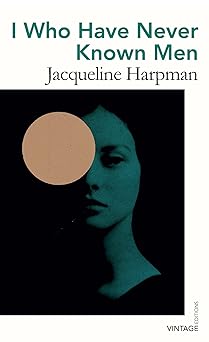
Blurb: Discover the haunting, heart-breaking post-apocalyptic tale of female friendship and intimacy set in a deserted world. Deep underground, thirty-nine women are kept in isolation in a cage. Above ground, a world awaits. Has it been abandoned? Devastated by a virus? Watched over by guards, the women have no memory of how they got there, no notion of time, and only vague recollection of their lives before. But, as the burn of electric light merges day into night and numberless years pass, a young girl – the fortieth prisoner – sits alone an outcast in the corner. Soon she will show herself to be the key to the others’ escape and survival in the strange world that awaits them above ground. The woman who will never know men.
Book Club Questions – careful spoilers:
The cage and the guards
- The novel never explains who the guards were, why the women were imprisoned, or what happened to the world. Did that frustrate you, or did the refusal to explain feel essential to what the book is doing?
- Why do you think the narrator’s whipping incident (when she tries to touch Anthea) sticks with her so much? What does it teach her about the rules she lives under?
- The women in the cage maintain routines, hierarchies, and modesty even with no privacy and no future. Is that dignity, habit, or something else?
The narrator
- She has no name, no memory of the outside, no experience of desire, and no one her own age. Does that make her less human than the others, or does the book argue the opposite?
- She calls herself a “monster” or an anomaly at several points. Do you think she believes it?
- Anthea becomes something like a mother to her. How would you describe that relationship, and what does the narrator take from it?
- The older women grieve for a world they lost. The narrator can’t grieve for it. Which position seems harder to you?
Freedom and what comes after
- Once they escape, the women have total freedom and nothing to do with it. What does the novel suggest about freedom without purpose or company?
- The suicides after the escape are described almost matter-of-factly. How did the book’s tone in those passages affect you?
- The narrator teaches herself to count time, keeps a record, and eventually writes. Why does she bother, given that she’s certain no one will read it?
- Discovering the other bunkers full of corpses answers nothing but changes something. What does it change for her?
Bigger questions
- Is this a science fiction novel, a philosophical fable, or something else? Does the label change how you read it?
- The book was written in 1995 by a Belgian psychoanalyst who survived the Nazi occupation as a child. Does knowing that shift your reading?
- What do you make of the title? Who are the “men” she has never known, and what is she claiming by naming herself that way?
- The narrator ends alone, writing, with no expectation of a reader. Is the ending bleak, or is there something in it you’d call hopeful?


